Full case studies, structured as sections of draft dossiers, aim to highlight issues that might arise if State Parties were to prepare nomination dossiers highlighting the astronomical values of the properties concerned. Examples:
 Chankillo, Peru
 Risco Caído and the sacred mountains of Gran Canaria, Spain
N.B. Both these properties have been inscribed on the World Heritage List since being published on the Portal.
Over 110 of the IAU’s outstanding astronomical heritage sites have now been published on the portal. These are sites considered outstanding in the history of astronomy but which are not necessarily suitable for inscription on the World Heritage List. The period from the European Renaissance to the middle of the 20th century was an extremely rich one for the history of astronomy and the IAU’s list so far focuses on sites of this type. Examples:
 Uraniborg and Stellaeburgum, Sweden
 La Plata Observatory, Argentina
 Bosscha Observatory, Indonesia
Short case studies follow the format used in the ICOMOS–IAU Thematic Study on Astronomical Heritage. Examples:
 Hortobágy Puszta, Hungary
 Jantar Mantar at Jaipur, India
 Sydney Observatory, Australia
Movable objects
We have recently introduced movable object case studies in order to document items such as artefacts and portable instruments in a more suitable format. Examples:
 Nebra Sky Disc, Germany
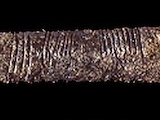 Ishango Bone, Democratic Republic of the Congo
PC2S is our global community project, set up in 2019 as part of the IAU’s 100 Years Under one Sky celebrations.
The examples on the Portal illustrate some novel ways in which terrestrial locations can be connected to the sky, including:
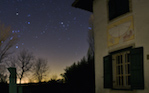 Aiello del Friuli, village of sundials, Italy
 Otford Solar System, UK, USA, Falkland Is., Australia, New Zealand
For more information follow this link!
Finding relevant information
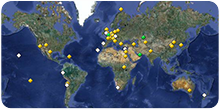
 You can locate case studies of interest both geographically and temporally using our astronomical heritage finder, or browse a complete list. You could also start from one of our Thematic Essays.



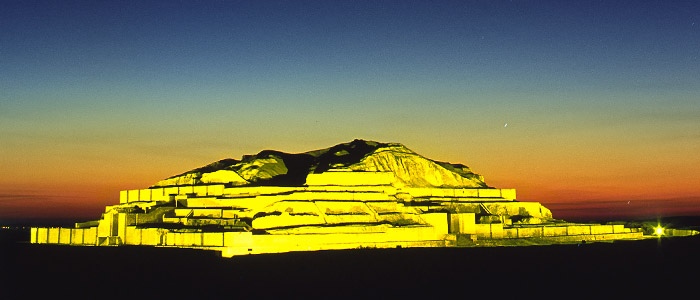
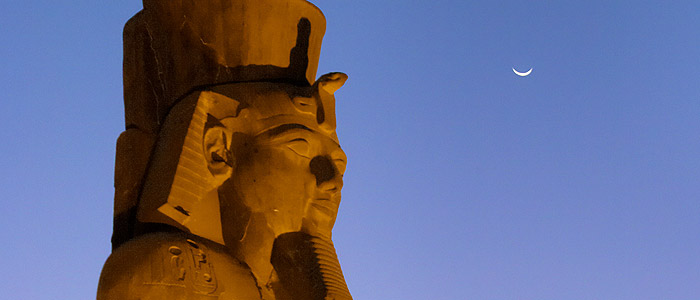



 Welcome to the integrated web portal set up to serve UNESCO’s
  Cultural heritage related to the sky is a vital component of cultural heritage in general.
 This portal was set up to support UNESCO’s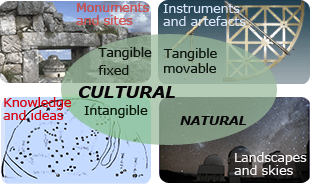
 We are developing
  See our